Wednesday, September 5, 2012

5 Reasons to Raft This Fall

School is back in session, football is on TV and there's Halloween candy at the big box stores. So, in some ways the fall season is here. But throughout most of the South average high temperatures will remain in the 80's and 70's throughout September and October. So, just because summer is in the books doesn't mean the outdoor season is over. In fact, it's about to be the best months of the year for outdoor recreation.

So here is a short list of the five best reasons to get out for a rafting trip this fall:


#1: Color

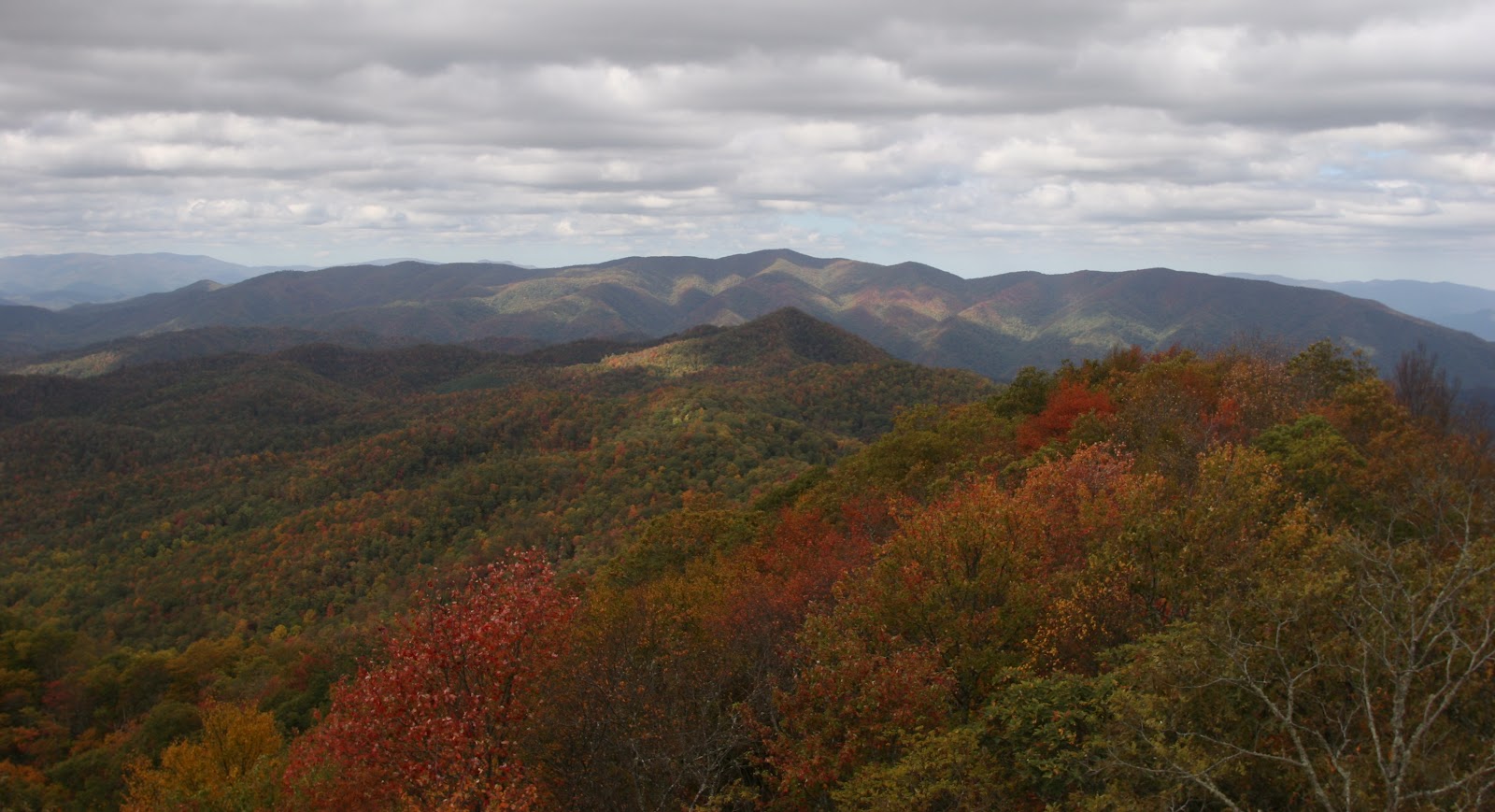
Fall brings beautiful foliage and picturesque scenery around the region.  What better way to take in the changing leaves than from a raft in the middle of a beautiful river gorge? And rafting can be as active as you want: a brisk float on the Nantahala or an exciting rush through the Five Falls on Chattooga Section IV.
Fall Foliage in the Smoky Mountains. Looking to the Nantahala Gorge.

#2 Crowds

Everybody likes the summer, so most of the summer crowds are gone by fall.  This means paddlers enjoy an intimate feeling out on the river.  You won't be bumping into many other rafts or kayakers.  On some rivers it will feel like just you, your group and the river. 
Small trip down the Nantahala.

#3 Cost

As fall rolls in, so do fall prices. You can save anywhere from 15-30% off peak season rates.  These are the same great trips, same rivers, same service, better prices--and perhaps better scenery. Note that some rivers do not run as late into the fall as others, so start planning a fall trip today.
All the fun of a summer trip at the fall price!

#4 Cool Weather

The sweltering heat is replaced with simply pleasant weather. Instead of sweating or being too hot, fall brings in crisp air.  Don't worry though, NOC offers splash jackets to keep you dry so you stay comfortable on the river.  You'll get more gear to sport, and you'll look more fashionable in NOC's couture river gear.
These pumped up rafters aren't even thinking about the fall color in the middle of  the Chattooga's Five Falls.

#5 Create a Getaway

There's "Spring Break" and "Summer Vacation" but nothing for fall? Take a weekend and make your own "Fall Getaway." Rafting can make for a quick and easy break for families, friends or coworkers.  NOC offers rafting trips into late October on some rivers, so you will have plenty of time to fit in a river trip between now and then.
Rivers End: Open all four seasons for riverside dining!


Fall Rates for 2012

It's not time to put your swimsuits away just yet! Take advantage of NOC's Fall Rafting Rates during the next two months.  NOC Fall Rates vary for each river and have different start dates. Every trip is the same exact trip in all ways, (guides, gear, service, etc.) just at a special off-season rate


Fall Rafting Rates Schedule
(Rates are discounted off of Summer Pricing)

25% off now through the end of September
30% off in October

20% off through the end of the season


15% off in October

25% off in October


2012 ICF World Cup - Mid Competition Update

The 2012 ICF World Cup is in full swing, with the first two competitions complete and the final event starting Friday. Over 100 paddlers from around the world will be trying to win the grand finale at NOC. So far the athletes are "bringing it" and drawing big crowds. Interested in the action? Click the link below to check out photos from the second event.

Brendon Orton from Great Britain gets huge air at the Pigeon World Cup

Take a look at these photos from the World Cup Pigeon River Event.

World Cup Final
The final World Cup event will be held on the Nantahala at one of the most spectator-friendly environments anywhere. Park at NOC and have full access to both the Nantahala River and the World Cup events: you can raft or paddle the river and then stick around for free music in the evening. Even non-paddlers will enjoy the exciting event atmosphere and riverside amenities at NOC. So come out and join us!

Remember, this is it: the final dry run for athletes and judges before next year's World Championships.


Craig Kleckner representing his countries' competitors on and off the river

Competition starts on September 7th with the Award Ceremony on September 9th.  Throughout the event you can look forward to face painting and other kids activities from 1-3pm everyday to keep your family entertained.  There will be live music for entertainment in the evening on the 8th and 9th.

Click here for more information about the World Cup Final
Click here for full results from the Rock Island and Pigeon World Cups

Can't make it to the World Cup Final?
Watch a live feed of the action at the Nantahala Feature online!

Friday, August 3, 2012

Olympic Memories: 40 Years Since Augsburg (Part Two)

This August six NOC alumni celebrate the 40th anniversary of their appearance in the 1972 Summer Olympic Games in Munich. The list includes Carrie Ashton, Louise Holcombe, Cindi Goodwin, Russ Nichols, Angus Morrison and John Burton . We caught up with John to discuss whitewater paddling—which was making its Olympic debut, the thrill of going to the Olympics, how the games changed his life, the tragedy of the Munich massacre and what it's like watching the London games on TV 40 years later. John also gives us a look into his Olympic scrapbook and reflects on the significance of participating in the world's biggest sporting event, the Summer Olympics.

[Continued from Part One]

Tragedy in Munich
Of course, the 1972 Games were marred by the Munich Massacre. John's competitive events were finished six days before the violence, and he spent most of this time at the games enjoying the Olympic Village and watching other athletes compete in a variety of events. He even had a hard-to-get finish line seat for the 100 meter dash. However, the hostage situation cast a pall over what was a wonderful experience. Of the hostage situation and subsequent violence John wrote:

"Yesterday 12 Israeli Olympic team members were murdered.  Kidnapped and murdered by fanatics.  How and why could that happen here, in this place of international fellowship, friendly competition, shared effort and achievement?  What now?  Will the Games be cancelled?  We are all going into the Olympic stadium today for a memorial service—what an amazing contrast to the joy and good will we all experienced just a few days ago in that place."

For Munich athletes like John, who never went to another Olympic Games, it is difficult to process the attack and to understand how it fits into their Olympic memories. The Olympic experience was rightly a high point of the competitors' lives, and they fondly remember the competition and the positive experiences of the games. However, in the midst of the Olympic Village a gruesome and horrible situation played out in plain sight. This was a stark contrast to the as-inspiring-as-usual Olympic competition and Olympic spirit seen and felt in the Munich venues and recalled in the minds of the Games' athletes.


Looking Back

John may have qualified for the 1976 Montreal Games if whitewater had been offered, but whitewater slalom would not return to the Olympics until 1992. He breifly retired after the Olympics, but returned in 1973 to coach the US team at the World Championships in Switzerland. In 1974 John taught a clinic at NOC—the first visit to his future home; he would move to NOC in 1976. While John doesn't seem very upset about missing the '76 Games, he regrets that the twenty year break between whitewater slalom events occurred at a time of American dominance. Davey HearnJohn Lugbill, Cathy Hearn and Kent Ford all could have won gold medals at the Olympics in the 1980's, and combined with Joe Jacobi and Scott Strausbough's gold in Barcelona in 1992, whitewater slalom could have become a highly recognized medal program in the United States. In addition to skill, John asserts that these athletes had media appeal: "They would have been national heroes, like Shuan White."

Interestingly, for John, the team trials was the biggest race of his life—not the Olympics. He says: "The difference between making the team and not making the team is intense. From this vantage point, you have to balance ego with a frank admission of how much luck is involved. If you want to be an Olympian, most importantly, you better choose the right parents." As for being an Olympian. He claims this has made a major difference in his life, a profound difference. "Humans have two key psychological needs. We want to stand out, and we want to belong to a tribe. Making the team fills both of those needs. There are over 300 million people in this country, but only a few thousand Olympians."

When discussing whether the United States can become a competitive powerhouse again John notes the low profile of racing within American paddlesports. "Purists just want to explore, run rapids and get away. Racing is almost antithetical to the counterculture boater—he or she doesn't want to compete." He notes that it also takes extreme dedication to participate. "You have to drive to races, go to places like NOC to practice, find a racing club, and keep at it. It takes thousands of hours of practice to be competitive, and paddling requires thousands of hours of logistics and driving as well."

John emphasizes the importance of canoe clubs to his competitive career. Canoe clubs, he claims, are vital for development of competitive athletes. For example, Nantahala Racing Club, NOC's hometown canoe club, has actually been recognized as a "Center of Excellence" by USA Canoe/Kayak for its contributions to developing competitive athletes. Eric Hurd is an NRC member representing the US in London in 2012.

Georgia Canoeing Association, Carolina Canoe Club, Atlanta Whitewater Club, Tennessee Valley Canoe Club, and the Appalachian Paddling Enthusiasts are additional regional clubs that organize paddling trips, host local paddling sessions and attend competitions. Like these, John's club, even though it was only four people, was critical to keeping him involved and dedicated to his training.

Final Thoughts

This week John wrote about his Olympic experience for NOC's Staff Newsletter, "In the Flow." These comments sum up the experience plus the perspective John's gained over the past forty years:

"Someone once asked me, in the early pre-Olympic days, why I was willing to work so hard in such an obscure sport when (in their view) so little reward was available.  I can now understand that perspective, but at the time the question made no sense to me.  For me, the rewards of finding my passion, of training and improving and being on the fine edge of excellence through hard work, of getting the most out of myself in a difficult pursuit, were so obvious as to need no justification.  For me, winning wasn’t everything, but the pursuit of excellence was and is noble and worthy.  The challenge was to pursue the goal with passion yet with perspective, with humility, and with the ego in check.  Sometimes I would slip into blind selfishness, and be pretty thoughtless to those around me.  It requires maturity I did not have 40 years ago.  Some might say 40 minutes ago, since paying attention remains a life-long endeavor.

Late in my career I discovered that my rewards were multiplied by competing with a partner, and I got extraordinarily lucky in having two perfect partners.  In 1972 I raced with Tom Southworth, who remains my hero and the example of how to compete intensely but with perspective.  From 1975 to 1979 I raced internationally with Gordon Grant, fellow Mondamin and NOC alum, and rediscovered the extraordinary joy of being better with a teammate than I could ever be alone, because sharing the experience made it so much more special.  We were and remain great friends, for which I am extremely grateful.

So, as I watch the athletes in London, I am an unrepentant fan, feeling gripped, cheering, holding my breath, laughing and crying as event after event unfolds.  To them all I would say 'Bravo!  Revel in these moments, good for you.  Remember, you didn’t do this alone.  Your life will be different from now on, and my wish for you is to find a healthy balance of pride, gratitude, and humility.'


Olympic Memories: 40 Years Since Augsburg (Part One)


This August six NOC alumni celebrate the 40th anniversary of their appearance in the 1972 Summer Olympic Games in Munich. The list includes Carrie Ashton, Louise Holcombe, Cindi Goodwin, Russ Nichols, Angus Morrison and John Burton . We caught up with John to discuss whitewater paddling—which was making its Olympic debut, the thrill of going to the Olympics, how the games changed his life, the tragedy of the Munich massacre and what it's like watching the London games on TV 40 years later. John also gives us a look into his Olympic scrapbook and reflects on the significance of participating in the world's biggest sporting event, the Summer Olympics.

Road to the Olympics

NOC's Executive
Vice President John
Burton celebrates the
40th Anniversary
of his 1972 Olympic
appearance this
August.
John Burton found the obscure pastime of whitewater paddling at Camp Mondamin in Tuxedo, North Carolina. As a youngster he learned paddling fundamentals and began to enjoy whitewater canoeing. He excelled in the activity, and became one of the better paddlers at the camp. Years later, the first two people he met at Dartmouth College were Jay Evans, advisor to the Ledyard Canoe Club, and Wick Walker, C-1 paddler who had just returned from the 1965 World Championships in Europe.  When Wick needed someone to help build a mold for the new boat he had just brought back from Europe, John was happily recruited/duped/Tom-Sawyered into performing the chore. That's how he entered the realm of competitive whitewater racing. Shortly thereafter he started training with a ragtag four-member local canoe club in Median, Pennsylvania and began racing internationally in '67.

Meanwhile, a combination of factors were leading to the whitewater slalom's Olympic status in 1972. The whitewater world championships were getting bigger and bigger, and even in the U.S. where it was considered a fringe lunatic sport (more on that shortly), John claims "there must have been 25 races in the East." Politically, the West Germans decided to use their host status to field an event where they could win gold, and along with East Germany, who also had a strong paddling team, they lobbied for canoe and kayak slalom across the usually impregnable Iron Curtain. The event was established, and the US Olympic Committee found itself scrambling to build an Olympic team.

All of a sudden, John and his paddling companions on the US world championships teams found themselves as the primary hopefuls for the US Olympic Team's whitewater slalom athletes. The team trials were held on the Savage River in Maryland, and John paddled well enough to qualify. He actually qualified in both one-person canoeing and two-person canoeing events, but he and partner Tom Southworth made a strategic decision before team trails that if the two-person boat made the Olympic Team, they would paddle that instead of the one-person boat—thus enabling the other boater to make the trip to Munich.

To accommodate the new sport West Germany built an unprecedented new course at Augsburg. The course, originally a diversionary canal for river ice on the Lech River, is fed by river water through a sluiceway. The water then spills down a 10 to 12 meter wide channel with vertical concrete walls and 35 concrete humps that create the whitewater features. Over 20,000 spectators fit into the venue which provides excellent up-close seating on terraced terrain surrounding the course. The almost 2,000'-long course took most teams about five minutes to complete (very long by modern standards). You can see some photos of the construction and competition in a clipping from John's scrapbook.

While whitewater racing was (and remains) very popular in some European countries, but American sportswriters didn't really know what to make of the event. Red Smith of the New York Times wrote: "The sport, is a hasty search for a watery grave, with rules. It is an outgrowth of white-water racing, which appeals to people whose idea of fun is to be flung down the rapids ears over appetite, hurled against rocks and submerged until the coroner arrives."

To clarify Smith also noted, the sport is "...a slightly suicidal undertaking new to the Olympic Games, which combines the best features of skiing down the Matterhorn, shipwreck, and going over Niagara in a barrel."

"Fame" and the Games

John and Tom handled their newfound Olympic "fame" with a grain of salt. Before the Olympics the Olympic team sent the paddlers a publicity form asking for sportswriters who had been following them thus far; they filled out the form writing only, "Are you kidding?" At the time John was employed as a securities analyst for Philadelphia National Bank and Tom joked that, while he could get the required seven weeks off unpaid from his generous bosses, there was no way even John could get him a loan from PNB to help cover his Olympic expenses. Paddlers have always been suspicious--even Olympic paddlers.

Perhaps adding to the athletes' self-deprecating attitude was the fact that they had to make almost everything they used to compete, and they certainly had to pay for it all. The athletes built their own boat and even their own paddles. John made the t-grip for his canoe paddle on a lathe at Dartmouth out of walnut. Reflecting on the boat they paddled, John notes that they unwisely added an inch of extra material around the boat's seam (which basically traces the waterline of the boat). This decision gave the boat extra volume and was meant to help navigate the "weird" waters at Augsburg, which have a tendency to pulse and boil due to the course's unnatural vertical walls. It turns out the winning East German team actually squeezed volume out of their boats and sneaked most of the big water features—a style that tends to dominate in modern racing. You can also see from the photos that John and Tom raced an "end hole" boat, where the paddlers sit with considerable space between them, almost like a traditional canoe. In '72 the rules did not yet allow close-cockpit C-2’s thus preserving the traditional canoe shape and design.

At the Olympic competition the pair made their first run in 7 minutes and 7.4 seconds (with penalties included). The pair was tenth out of twenty teams after the first run—six teams were unable to complete the first run in their boats. The team's second run was an improvement, shaving twenty seconds off the first time, and John and Tom ended up finishing in 12th place, ahead of the other American team. An American teammate, Jamie McEwan did win the bronze in the one-person canoe event (the event John also qualified for). John's diary from the event reads:

"My C-2 partner Tom Southworth and I just finished 12th in our race, rolling twice on our counting run!  Our time was over 6 minutes on the wild Augsburg artificial course, but we finished, and we were the top American boat, so we were very happy.  'You can lose the Olympics with honor' was certainly true for us, who were totally delighted just to make the team.  The Olympic Trials were really the gut-check, you-have-to-be -your-best moment for us, and we won it.  So, flying to Munich, experiencing the opening ceremonies, eating fabulous food we didn’t have to prepare or pay for ourselves in the Village, having a coach and team manager taking care of our every need, being outfitted by Sears in our flashy polyester red, white and blue uniforms, rubbing shoulders with the U.S. basketball team, watching Jamie  McEwan win the bronze in C-1—it has been an exhilarating, once-in-a-lifetime experience."

[End of Part One: Click here to Read the Rest]


Wednesday, August 1, 2012

Many Reasons Remain to Raft this Summer

Back to School commercials are running on TV, the presidential nominating conventions are almost here, and there's a tropical storm out in the Gulf of Mexico--all signs that time's running out on summer 2012.  So, before you get back to the year-round routine, time remains for one last hurrah outside with friends and family. What better way to end the summer than out on the river with loved ones?

Some of our guides at the Nantahala River agree, and they offered a few more reasons on why it makes sense to end the summer at NOC:

"Here at the Nantahala everything is in one spot; it's an all-in-one weekend destination!" - Kim, Whitewater Rafting Head Guide

"Because when the weather is hot, the rivers are cold. It feels great." - Jen, Retail Manager

"Whitewater rafting brings the whole family, or group of friends, together for one last summer shindig on the river." - Taylor, Adventure Center

"We have the best trained guides, and they'll show you a great time on our rivers." - Curt, Nantahala Rafting Assistant Manager

"NOC's river trips are unlike anything else. You will leave with much more than just a great time; you'll have memories that will last forever." - Rachel, Guest Relations

Savings to Look For This August


Chattooga Section III & IV
Save $10 on all Chattooga Trips on Sundays in August. Section III is a family-friendly trip with mostly class II/III rapids and one optional class IV rapid.  Section IV is a beautiful wilderness run with many class IV/V rapids including the famous "Five Falls"stretch. Both sections are full day trips and include a delicious and fun riverside lunch.

Rafters launch off Bull Sluice, the optional Class IV rapid on Chattooga Section III.


Pigeon River Discount Trips - as low as $24.99
The Pigeon River, just outside of  Hartford, TN, offers discounted trips in the late afternoon through August.  The Upper Pigeon boasts class III and IV rapids,  and is great for beginners who are looking for some big splashes.  Kids as young as 8 years old can raft this section, so it also makes for a fun family trip! A perfect addition to a weekend in the Smokies or in Gatlinburg, TN.

Upper Pigeon Rafting
Ocoee River Discount Trips- as low as $24.99
With fun, bouncy waves and class III and IV rapids, the Ocoee is a classic southeastern river.  In August, the Middle Ocoee offers discount trips early in the morning or late in the afternoon on Sunday's.  This section is a nice step up from a beginner river for folks who are looking for some exciting whitewater.  You must be 12 years old to raft this section of whitewater.
Middle Ocoee Rafting
To book a rafting trip click on the links above to go to noc.com, or call 800.905.7238.

Calling All Paddlers: Tune Up for Fall Paddling Season

NOC's nationally known Paddling School is offering an early-booking discount throughout August. Why? "Because paddling in the Fall is awesome!" if you ask Tosh Arwood, Paddling School manger. Arwood went on to explain there are fewer crowds in the Fall than during the summer rush and that you'll be surrounded by beautiful, colorful fall scenery.

In plain terms, this discount means you can save 15% when reserving a multi-day course or a private instruction course in September or October if you book it before August 31st. That's perfect timing for most paddlers since the fall is often the time for releases on some of the Southeast's most challenging rivers like the Gauley, Cheoah, Tallulah and big-water releases on the Ocoee.

Take your skills to the next level and enjoy the thrills and beauty of creek boating.

World Class Instructors

NOC instructors like Andrew Wilmott can make a lasting impact on your paddling skills. Andrew has been teaching kayaking at NOC for 17 years now, and attributes his love of teaching to his students.  "It's about the people.  It's not just about kayaking, but the community of the sport and the relationships built around it."  Andrew, along with many of our instructors love to share the experience of learning to kayak with guests.  "When someone is in 'Truck Stop' eddy, nervous to run Nantahala Falls for the first time, I put myself back in their position when I was first learning. I get into that mindset to go through what they are going through at that exact moment.  It's all about sharing the experience and reassuring the guest they can achieve their goals if they want to," explained Wilmott.


Andrew instructing a multiday course starting at Lake Fontana
Multi-Day vs. Private Instruction Courses
NOC offers a variety of programs to fit each guest's needs, time and budget. For this blog, we contacted two guests who have taken a multi-day course or a private instruction course to see how their experience with NOC's Paddling School played out.  Chris Mahannah took a 5-Day Learn To Kayak course while Steve Pack chose the Private Instruction.

Five Day Course Experience
During a multi-day course, the instructors concentrate on advancing skills through gradual progressions and building a relationship between kayaking and the guest. Mahannah enrolled in a multi-day course with his buddy, they both had very limited experience in whitewater kayaking.  They chose the multi-day course because they thought they would benefit from having more time on the water and simply had the time to do it. Mahannah had two goals before beginning this course: 1) to learn to roll and successfully do it in fast moving water, and 2) to comfortably and safely navigate a river. "I had no clue there were so many strokes and so much involved in moving in and out of eddies," explained Mahannah when talking about his experience. Throughout the Five day course, Mahannah paddled the Nantahala, Pigeon and a section of the Chattooga.

When reflecting on his course Mahannah explains, "On day four, our instructor let us take on some faster moving water (part of the Chattooga River), and it was a blast.  Andrew Wilmott was a super cool instructor, who taught us a lot and adjusted the course to our desires."  Depending on how many people are in a multi-day course and how smoothly everyone progresses determines which rivers the class will get on. Mahannah's final feedback was not uncommon for the Paddling School to receive: "I learned a ton about kayaking and had a blast doing it.  Andrew was incredible, the food was great and the gear was top notch.  I would definitely take another course!"
Roll Practice at Lake Fontana
Private Instruction (PI)
NOC's private instruction service is very focused on a paddler's personal goals more than any set curriculum. NOC's most experienced instructors use their veteran know-how to diagnose problems and offer suggestions for individual student's abilities.  Steve Pack has some experience paddling, but due to his geographical location he never progressed pass being a class II paddler.  He moved back to Western North Carolina in 2009, making it easier to paddle and start learning again.  Pack explained that he signed up for private instruction because he "wanted an honest evaluation of [his] paddling skills with feedback on what [he] needed to improve." With a one-on-one course, all of the attention goes to the guest.  They can choose what they want to do and work with an instructor that determine how to get the most from the course.

When deciding between a full and half-day course, Pack went with the half day. "I chose the half-day PI because I felt I could accomplish my goals in this time frame. I also viewed it as a first course in a series of instruction," said Pack.  This is a popular route as well, many guests book their first PI as a step in a series of courses.

Pack learned a variety of skills that will improve and prolong his health in paddling.  Previously he stated he did not fully understand key skills and techniques of paddling resulting in strain on his elbow.  Tosh Arwood, Pack's instructor, "had the ability to accurately judge my limits and push me past them in a manner which challenged me and build confidence," explained Pack.  In a PI the instructor really gets to know the guest during the time they are together.  They learn how to take their skills to the next level in a time efficient manner.

A private instruction course below Nantahala Falls.
If you are in-between levels and are not sure what course to take, give our reservations office a call at 888.905.7238. They can assist you on selecting the right course. Or, you can visit the Paddling School's website for more information.